The revisionist account of Bunker Hill did not emerge from new evidence. It was
constructed through a deliberate, surreptitious political campaign to protect Massachusetts' honor
at the expense of a Connecticut general who could no longer defend himself.
Understanding why the narrative of Bunker Hill was rewritten by Massachusetts partisans requires understanding
the political embarrassment Massachusetts faced after the battle – and the powerful
men who set about correcting it. The story that emerged was not the product of
historical scholarship. It was the product of institutional power, family loyalty,
and one of the most effective propaganda campaigns of the early republic.
The Massachusetts Problem
The Battle of Bunker Hill presented Massachusetts with a painful contradiction.
The battle took place on Massachusetts soil, and the vast majority of the approximately
20,000 men available for duty were Massachusetts militia. Yet the heroes who emerged
from the battle were overwhelmingly from other colonies.
General Israel Putnam of Connecticut was universally acclaimed as the
hero of the day. Colonel John Stark of New Hampshire helped hold the critical
rail fence with Captain Thomas Knowlton of Connecticut who commanded the troops
who repulsed two British assaults. Meanwhile, General Artemas Ward,
Massachusetts' senior military officer, had broken his promise to reinforce and resupply
the exhausted men on the hill, who had toiled all night building the fort. This betrayal of trust likely cost the Americans the battle.
The same 1,500 exhausted, poorly supplied men were left to face the greatest
military force in the world, because Ward refused to commit even a fraction of the
20,000 troops at his disposal. Putnam was forced to ride repeatedly back to Ward's headquarters in
Cambridge to demand that he honor his commitment. Ward refused. He eventually agreed
only to release Stark's New Hampshire regiment of 200 men – too little, too late.
The recriminations that followed were devastating to Massachusetts pride. The battle
was lost at the redoubt, manned by Massachusetts troops. The commanding general, Artemas Ward, who
failed to reinforce them, was from Massachusetts. And the man universally credited with
the heroic defense was from Connecticut.
New England, with all its foibles, must be the glory and defense of America, and
the cry here is, Connecticut forever! So high has the universally applauded conduct
of our Governor, and the brave intrepidity of old General Putnam and his troops,
raised our colony in the estimation of the whole continent.
Silas Deane, writing from Philadelphia after the battle, 1775
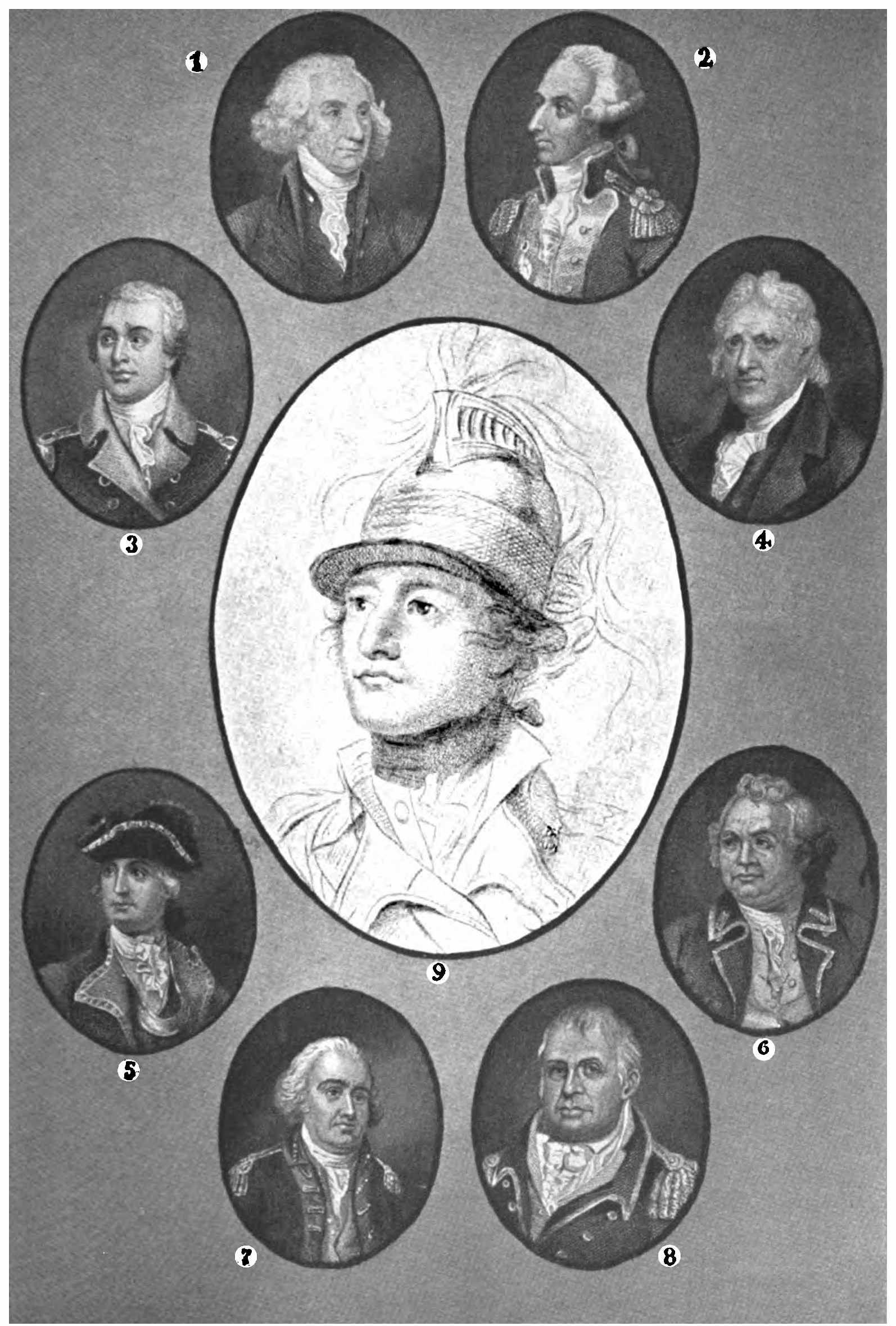
Washington's senior generals. Putnam (#6) served alongside Schuyler, Lafayette, Greene, and Knox at the highest levels of Continental Army command. Public domain.
This was the political environment that Massachusetts' most powerful men – Samuel Adams,
Elbridge Gerry, and their allies – resolved to change.
The Adams-Gerry Propaganda Campaign
Samuel Adams – the master propagandist of the Revolution, whose entire career was
devoted to advancing and protecting the honor of Massachusetts – was in Philadelphia
serving in the Continental Congress during the battle. He returned to Massachusetts
on August 11, 1775, nearly two months after Bunker Hill.
On September 26, 1775, Adams wrote a revealing letter to Elbridge Gerry – his close
political ally and future governor and vice president of the United States. This letter
is the propaganda blueprint for the post-battle narrative campaign. Adams urges that the
merits of Massachusetts officers be promoted "as far as decency will permit of it to
their advantage, and the honor of a colony, which for its zeal in the great cause, as
well as its sufferings, deserves so much of America." The full passage – and Adams's
own concession that he had not heard of Prescott's valor at the time of writing – is
examined in detail in Documentary Origins
below.1
Two features of the letter deserve emphasis here.
First, Adams explicitly acknowledges that Massachusetts officers
"disgraced" the colony – and proposes that any story hinting at bravery among them
be exaggerated "as far as decency will permit." This is not historical inquiry. It
is a blueprint for a propaganda campaign, which would credit Prescott with being the hero of the battle in Putnam's stead.
Second, the letter was written to Elbridge Gerry – the man who would
serve as Adams' successor in advancing Massachusetts' interests, and who maintained a
close personal and political alliance with Henry Dearborn for decades afterward.
How Massachusetts Actually Treated Prescott
If the contemporary record supported Prescott as the hero of Bunker Hill, we would
expect to see him treated accordingly in the weeks and months after the battle. The
record shows the opposite.
In the weeks following Bunker Hill, numerous Massachusetts officers received promotions
for their battlefield performance. William Prescott was passed over entirely.
He received no promotion, no commendation, and no official recognition from Massachusetts.
More tellingly, approximately two weeks after the battle, Prescott submitted a request
to the Massachusetts Legislature for reimbursement of out-of-pocket expenses he had
incurred in connection with the battle. This request was rejected.4
This is not how we would expect Massachusetts to treat the hero of its most celebrated battle. It is, however,
entirely consistent with the picture Adams painted in his letter – that of a Massachusetts
establishment embarrassed by the performance of its officers and searching for a narrative
that would restore the colony's honor.
By contrast, Israel Putnam received his commission as Senior Major General from George
Washington within three weeks of the battle – making him second-in-command of the entire
Continental Army.
He was universally celebrated as the hero of Bunker Hill throughout the colonies – and in England.
The Prescott Narrative: Documentary Origins
The institutional capture argument can be made directly from the documentary record of 1775 itself.
The narrative that elevated Prescott – and by displacement, marginalized Putnam – was not
contemporary with the Battle of Bunker Hill. It emerged in the late summer of 1775, was not
reflected in the institutional treatment of Prescott in the months following the battle, and was
unknown even to Prescott's most prominent political ally in the Continental Congress until he
visited Cambridge in late August. Three pieces of contemporary evidence make the point in their
own words.
The Verdict of Promotion
The Continental Army's institutional record speaks where individual testimony might be questioned.
Of the colonels in the patriot army of 1775 – the men whose performance at and around Bunker Hill
the military authorities had direct opportunity to evaluate – sixteen were promoted to brigadier or
major general during the war, including John Nixon, Ebenezer Learned, John Glover, John Stark,
James Reed, Benjamin Lincoln, Enoch Poor, and Joseph Frye.2
The list extends below the colonelcies, and several of the men promoted were Prescott's own
subordinates. Major John Brooks, who served under Prescott on the night march to Bunker Hill,
was promoted to lieutenant colonel, then colonel, then acting adjutant-general at Monmouth,
and ultimately governor of the Commonwealth – the same John Brooks who would twice defeat
Dearborn at the polls. Lieutenant Thomas Grosvenor became colonel. Captain Thomas Knowlton was
made major, then lieutenant-colonel, before his death at Harlem Heights in 1776. Captain Henry
Dearborn, of Stark's regiment, eventually rose to colonel himself.3
William Prescott was never promoted. He remained in the army until 1777, while contemporaries
around him – and men who had served under him on the night march – rose to brigadier and major
general. He retained the same rank he had carried with him from Pepperell on April 19, 1775.
As Increase Tarbox concluded:
It is next to a certainty, if he had acquitted himself well in that action, he would have been
speedily promoted... We cannot resist the conclusion that this silence and neglect on the part of
the military authorities, in his case, was a verdict of military incapacity.
Increase Tarbox, Life of Israel Putnam, 1876 (pp. 114–117)
The Massachusetts Reimbursement Denial
On June 27, 1775 – ten days after the battle – Colonel Prescott and seventeen other officers from
his and adjacent regiments petitioned the Massachusetts Provincial Congress for reimbursement of
clothing, arms, and other personal property lost in the fighting at Charlestown. Prescott's name
headed the list.
Two days later, on June 29, 1775, the Congress's response is recorded in the official journal:
The Committee appointed to consider the within Petition beg leave to report that the petitioners
have leave to withdraw their petition.
American Archives, 4th Series, Vol. II, pp. 1119–20.5
With this curt dismissal, the petition was rejected. New Hampshire – "though poorly able to
do so in comparison with Massachusetts" – reimbursed her men for their losses in the same battle.
The contrast is astounding. If Prescott had performed in late June 1775 as he was later remembered
to have performed, the petition submitted in his name would not have been "coolly bowed out of the
Massachusetts Assembly" ten days after the engagement.
Quoted with commentary in Tarbox, Life of Israel Putnam,p. 117.
Adams Heard Nothing of Prescott's Valor in the Summer of 1775
On September 26, 1775 – three months after the battle – Samuel Adams wrote to Elbridge Gerry from
Philadelphia, urging that the merits of Massachusetts officers be promoted "as far as decency will
permit" for the honor of the colony. The letter is striking for what it then concedes:
Until I visited headquarters at Cambridge, I never heard of the valor of Prescott at Bunker Hill,
nor the ingenuity of Knox and Waters in planning the celebrated works at Roxbury.
Samuel Adams to Elbridge Gerry, September 26, 1775. American Archives, 4th Series, Vol. II, p. 1438.6
Adams had been at the Continental Congress in Philadelphia from June through August 11, 1775. He
returned to Massachusetts, visited Cambridge in mid-to-late August, and only then – more than two
months after the battle – first heard that Prescott's performance at Bunker Hill was noteworthy in any respect.
Through the entire summer of 1775, while news of the battle circulated freely and contemporary
publications named Putnam by name as the commander and hero of the day, Samuel Adams – one of Prescott's strongest
political allies in the Continental Congress – had heard nothing of Prescott's valor. The narrative promoting Prescott
was not contemporary with the battle. It was constructed in late summer 1775, at Cambridge, in
the aftermath of the political maneuvering Adams himself was simultaneously coordinating.
Quoted with surrounding context in Tarbox, Life of Israel Putnam,pp. 252–256.
Who Was Henry Dearborn?
Before examining Dearborn's allegations, it is worth understanding who made them – and why the timing matters.
Henry Dearborn was a man of genuine public accomplishment: U.S. Representative from Massachusetts
(1793–1797), Secretary of War under Jefferson (1801–1809), and Major General commanding American
forces in the War of 1812. He was also, by 1818, a man whose reputation had been badly damaged.
His invasion of Canada in 1813 ended in failure attributed directly to his inaction; President Madison
recalled him from command. In 1815, Madison nominated him for Secretary of War; the Senate rejected
the nomination amid public opposition over his wartime record – the first time such a nomination had been rejected. He subsequently served as Minister to
Portugal under Monroe (1822–1824), a posting that carried diplomatic rank but little political weight.
In 1817, Dearborn ran for Governor of Massachusetts against the incumbent,
John Brooks – who had served under Israel Putnam at the Battle of Bunker Hill.
Dearborn lost decisively. He ran again in 1818 and lost again to Brooks. It was in that same year –
between the two defeats, 43 years after the battle – that Dearborn published his allegations against
Putnam in The Port Folio.
The convergence of dates is relevant. Brooks was a Bunker Hill veteran whose public standing rested
in part on that service. Dearborn's attack on Putnam's conduct at Bunker Hill was understood by many
contemporaries as an attempt to reframe the battle's legacy in ways that diminished Brooks by
implication. The strategy failed at the ballot box; the allegations outlasted the politics.
The timing carries one further dimension. Dearborn published his attack in the March 1818 edition of The Port Folio7 – 28 years after
Putnam's death, and weeks after the death of the witness best equipped to contradict him. David
Humphreys – Putnam's biographer and aide-de-camp, who had also resided at Mount Vernon with
Washington and had intimate access to Washington's recollections of Putnam's service – had died on
February 21, 1818,8 just over two
months before Dearborn went into print.
The Silence of Six Journals
Henry Dearborn was an unusually diligent diarist. He maintained six separate journals
that exhaustively chronicled his experiences throughout the Revolutionary War – from the march to Quebec
through the final campaigns of the conflict.
Not one of these journals contains a single word suggesting that Israel Putnam behaved improperly
at Bunker Hill – or at any other engagement.
This silence is not a minor omission. Dearborn was present at the battle. If he had witnessed the
cowardice he would later describe in such vivid detail – a general hiding on a hill 600 yards from the
fighting for the entire engagement – the natural moment to record it was in the journal he kept
during the war, not 43 years later in the pages of a political pamphlet. The journals survive. The
allegation does not appear in them.
The implications of this silence are straightforward. Either Dearborn did not witness what he claimed,
or he did not consider it worth recording at the time – which itself strains credibility if the
conduct was as egregious as he later alleged. In either case, the journals represent a devastating
problem for his credibility as a witness.
It constitutes an implied admission by conduct that the misconduct he later asserted with such viciousness never occurred.
Washington's Verdict
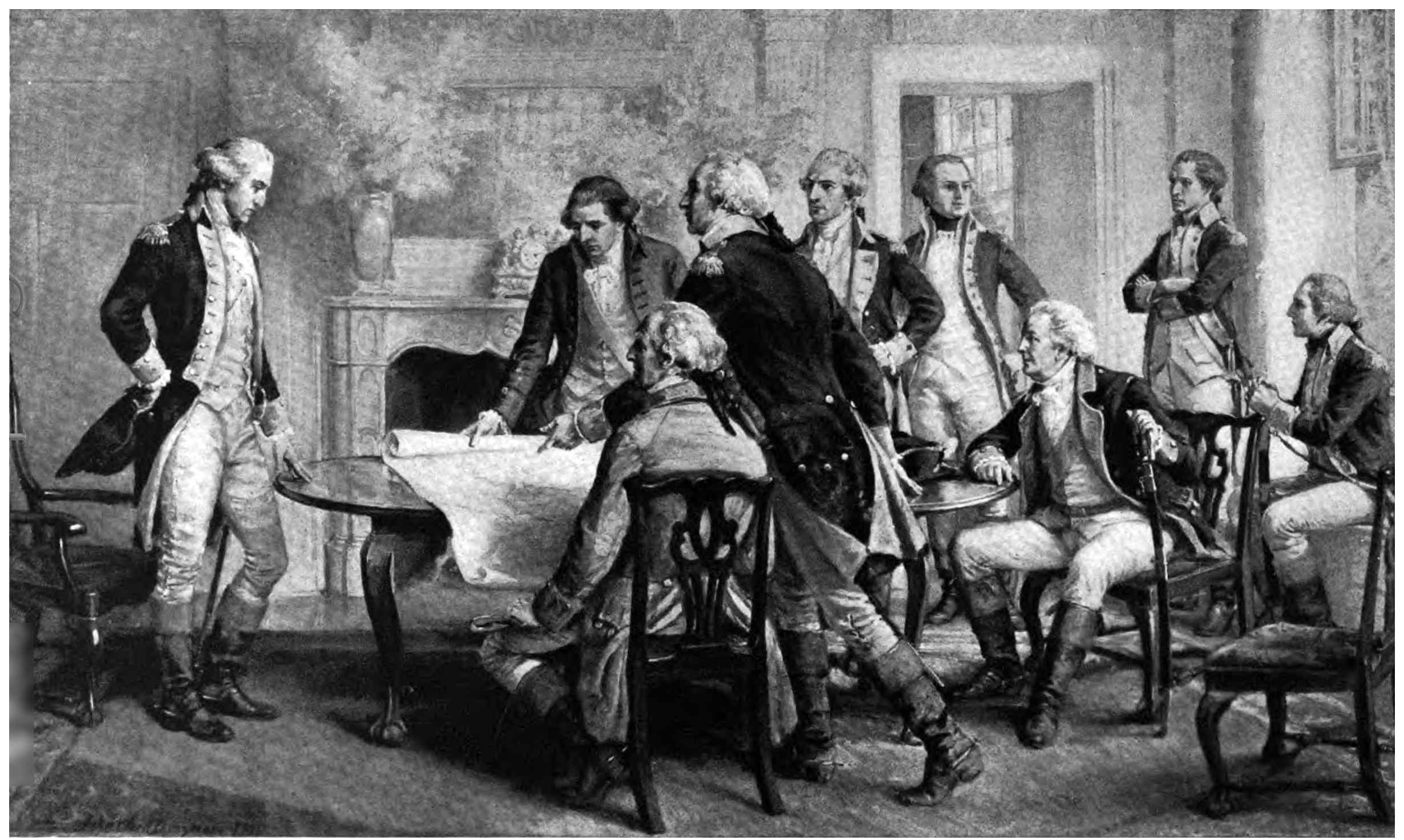
"Washington's Council of War after the Battle of Long Island" by John Ward Dunsmore. Putnam is depicted opposite Washington – a seating arrangement that reflects his standing as second-in-command. Washington, Parsons, Spencer, Mifflin, Scott, McDougall, Putnam, Wadsworth, and Fellows are pictured. Public domain.
George Washington arrived in Cambridge on July 2, 1775 – just three weeks after Bunker
Hill – to take command of the Continental Army. He carried with him commissions for four
major generals. His actions upon arrival speak louder than any subsequent clearly-partisan revisionist
account.
The first commission Washington presented was Israel Putnam's. He
deferred delivery of the other three. This made Putnam second-in-command of all American
forces – the man who would succeed Washington as commander-in-chief in the event of
Washington's death or incapacity. Given that Washington had no fewer than eight horses
shot from under him during the war, this was no ceremonial appointment.
Washington's decision to promote Putnam over General Ward – Massachusetts' senior
officer – subjected him to intense political criticism from his Massachusetts hosts.
He made the decision anyway, based on the reports he received about both men's conduct
at Bunker Hill. Ward was promptly stripped of decision-making authority and soon
resigned from the army.
The question the revisionist narrative cannot answer is simple: if Putnam had hidden
from the battle, as Dearborn alleged 43 years later, would Washington have made him
second-in-command of the army three weeks afterward? Would the Continental Congress — which had unanimously voted Putnam to major general weeks before the battle — have so honored a man known to its members as a coward? The premise is not merely unlikely – it is absurd.
Cambridge in 1776 vs. Cambridge in 1825
In 1776, the Committee of Safety wrote to Putnam – then preparing to take command at New York –
in terms that admit no ambiguity about how Cambridge regarded his service through the
post-Bunker-Hill siege. Frothingham, in his History of the Siege of Boston, preserves
two passages from the letter:
Your conduct, while in Cambridge, in every respect, and more especially as a General, ... we
hold in the highest veneration, and ever shall.9
Committee of Safety to Israel Putnam, 1776. Quoted in Frothingham, History of the Siege of Boston, p. 165 (note); and in Tarbox, Life of Israel Putnam, p. 119.
And, from the same letter:
The extraordinary services you have done to this town... must always be acknowledged with the
highest gratitude, not only by us, but by rising generations.10
Committee of Safety to Israel Putnam, 1776. Quoted in Frothingham, History of the Siege of Boston, p. 165 (note); and in Tarbox, Life of Israel Putnam, p. 119.
The letter speaks volumes for the town of Cambridge in 1776, while Putnam's role in its defense through
the siege of Boston was still fresh. "We hold in the highest veneration, and ever shall."
"Acknowledged with the highest gratitude, not only by us, but by rising generations."
The Dearborn Family and the Bunker Hill Memorial
Henry Dearborn published his allegations against Putnam in 1818 – 43 years after the
battle and 28 years after Putnam's death – in the same year he ran (and lost) his second
consecutive gubernatorial campaign against John Brooks, the Bunker Hill veteran who was
then serving as incumbent governor.
The strategy backfired. The Massachusetts electorate responded with outrage to the
attack on one of America's most beloved heroes, and Dearborn was decisively defeated.
But the story did not end there.
In 1823, Henry A.S. Dearborn – Henry Dearborn's son – became a founding
member of the Bunker Hill Memorial Association (BHMA), the organization
responsible for planning the 50th anniversary celebration and determining which
participants in the battle would be honored with statues and monuments at the battle site.
The younger Dearborn used his position within the BHMA to aggressively promote his
father's discredited narrative. He lobbied relentlessly for the honoring of Massachusetts
heroes – specifically Joseph Warren and William Prescott – and for the diminishment of
Israel Putnam's role. To justify honoring Warren and Prescott instead of the universally
recognized hero of the battle, Putnam's role had to be reduced.
To accomplish this, Henry A.S. Dearborn rehabilitated his father's allegations and
mounted a ferocious public campaign – in the press, through friendly newspapers, and
through the institutional machinery of the BHMA – to position the anti-Putnam narrative
at the center of public consciousness.
The campaign succeeded. At the 50th anniversary celebration in 1825, attended by
approximately 100,000 people, the narrative of the battle was the one crafted by the
BHMA under the younger Dearborn's influence. Warren and Prescott were honored as the
unqualified heroes. Statues were erected in their honor.
This wanton distortion of history extends to the revisionists' shameless attempt to attribute the famous quote, "Don't fire 'til you see the whites of their eyes," to Prescott — despite the fact that no eyewitness has ever claimed to have heard those words from him. By contrast, this site includes sworn statements from several eyewitnesses who heard this command directly from Putnam during the battle.
Israel Putnam's name was mentioned once.
How Institutions Become History
The shift in the Bunker Hill narrative was not the result of new evidence or superior
scholarship. It was the result of institutional power marshalled by men with personal
and political motives. To summarize the chain, starting with the expert propagandist Samuel Adams:
Year
Event
Significance
1775
Battle of Bunker Hill; Putnam universally acclaimed as hero
Immediate contemporary consensus
1775
Adams writes to Gerry proposing propaganda campaign
Blueprint for narrative revision
1775
Prescott denied promotion and expense reimbursement
Once the BHMA enshrined the revised narrative in stone – literally, in the form of
statues and monuments – it became self-perpetuating. Subsequent writers, including
those working two centuries later, could point to the monuments and the institutional
record as "evidence" for a version of events that was manufactured by men with transparent
political motives.
As Putnam biographer Increase Tarbox observed in 1876:
It is not the aim of this volume to report any new historical discoveries, but simply
to bring back to its old anchorage ground an important piece of American History, which,
for a quarter of a century, by a subtle undertow, has been drifting from its place. I
have attempted to write the Life of Major General Israel Putnam by the light and with
the evidences of the last century, and not by the false lights of 1875.
Increase Tarbox, biographer of Israel Putnam, 1876
What was true in 1876 remains true today. The "subtle undertow" Tarbox described has
continued for another 150 years – aided now by websites and documentaries that repeat
the revised narrative without examining its origins or weighing it against the 63 sworn
eyewitness testimonies that contradict it.
The 43-Year Silence
Perhaps the most damning fact about Dearborn's allegations is their timing. If
Putnam had truly behaved as a coward at Bunker Hill, Dearborn had a duty – both moral
and military – to report it. Cowardice in the face of the enemy was a capital offense.
Officers were court-martialed for it in the weeks following the battle, with Judge
Advocate William Tudor presiding. Tudor testified that in all those proceedings, he
"never heard any insinuation against the conduct of General Putnam."
Dearborn said nothing for 43 years. He served alongside Putnam's defenders, rose to
prominence in the political and military establishment, and never once raised the
allegations he would publish in 1818. By that time, Putnam had been dead for 28 years,
and many of the eyewitnesses who could have assisted in his defense had also passed.
In the law, there is a doctrine called laches – the principle that unreasonable
delay in asserting a claim undermines its credibility, particularly when the delay
prejudices the opposing party. Dearborn's 43-year silence, followed by allegations
timed to a political campaign, is a textbook case.
As former President John Adams wrote in response to Dearborn's claims:
This I do say without reserve, I never heard the least insinuation of dissatisfaction
with the conduct of General Putnam during his whole life; and had the characters of
Generals Greene, Knox, La Fayette, or even Generals Warren, Montgomery, or Mercer,
been called in question, it would not have surprised me more.
President John Adams, 1818
Adams placed Putnam's reputation in the company of the most revered figures of the
Revolution – Greene, Knox, Lafayette – and expressed astonishment that anyone would
question it. This was not a casual observation. It was the testimony of a man who had
been at the center of revolutionary decision-making, who had personally voted to
appoint Putnam as Major General, and who had never – in 43 years – heard a whisper of
dissatisfaction with Putnam's conduct.
Why This Matters
The story of how Israel Putnam's reputation was diminished is not merely a historical
curiosity. It is a case study in how institutional power can override primary source
evidence – how a narrative constructed by men with political motives can, over time,
become accepted as fact simply because it has been repeated often enough and inscribed
in stone.
Washington himself anticipated this danger. Writing to Israel Putnam in June 1783, as the war drew
to a close, he left a permanent record of where the General stood among the great officers of the Revolution:
Among the many worthy & meritorious Officers with whom I have had the happiness to be
connected in Service through the Course of this War, the Name of a Putnam is not forgotten;
nor will it be, but with that Stroke of Time which shall obliterate from my Mind the
Remembrance of all those Toils & Fatigues through which we have struggled for the
preservation & Establishment of the Rights, Liberties & Independance of our Country.
George Washington to Israel Putnam, June 2, 1783
The evidence has always been there – in the 63 sworn testimonies, in Washington's letter,
in his appointment of Putnam as second-in-command, in Adams' unequivocal endorsement, and in
the silence of the courts-martial that investigated officer conduct at Bunker Hill. What
has been missing is the will to weigh that evidence against the institutional narrative
and to ask the obvious question: who benefited from rewriting the story, and when did
they start?