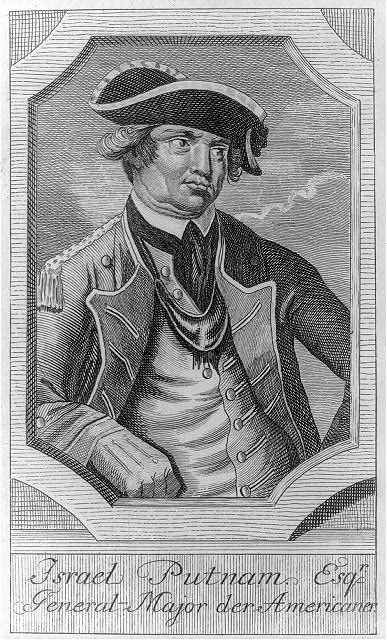
"Israel Putnam, Esq'r, General-Major der Americaner." Etching by G.N. Raspe, Nürnberg, 1778. Library of Congress. Public domain.
1718–1790 · Farmer, Soldier, Major General
"Israel Putnam, Esq'r, General-Major der Americaner." Etching by G.N. Raspe, Nürnberg, 1778. Library of Congress. Public domain.
Israel Putnam (1718–1790) was more than a battlefield commander – he became a symbol of American resilience, the citizen-soldier who left his plow to answer the call. To understand why his reputation matters, we first need to understand the man himself.
Born in Salem Village, Massachusetts (now Danvers), Putnam moved to Connecticut in 1740 to farm. When the French and Indian War began, he volunteered and quickly distinguished himself in colonial service.
Between 1755 and 1758, Putnam rose through the ranks from private to major – an unusual trajectory that reflected both his natural leadership and the brutal attrition of frontier warfare. He was captured during fighting on the frontier and narrowly survived captivity and near execution by being burned at the stake, an ordeal that became one of the most retold episodes of his early life. He served in demanding irregular ranger campaigns and later commanded Connecticut troops at the Battle of Havana in 1762. By the eve of the Revolution, he was among the most experienced field officers in the colonies.
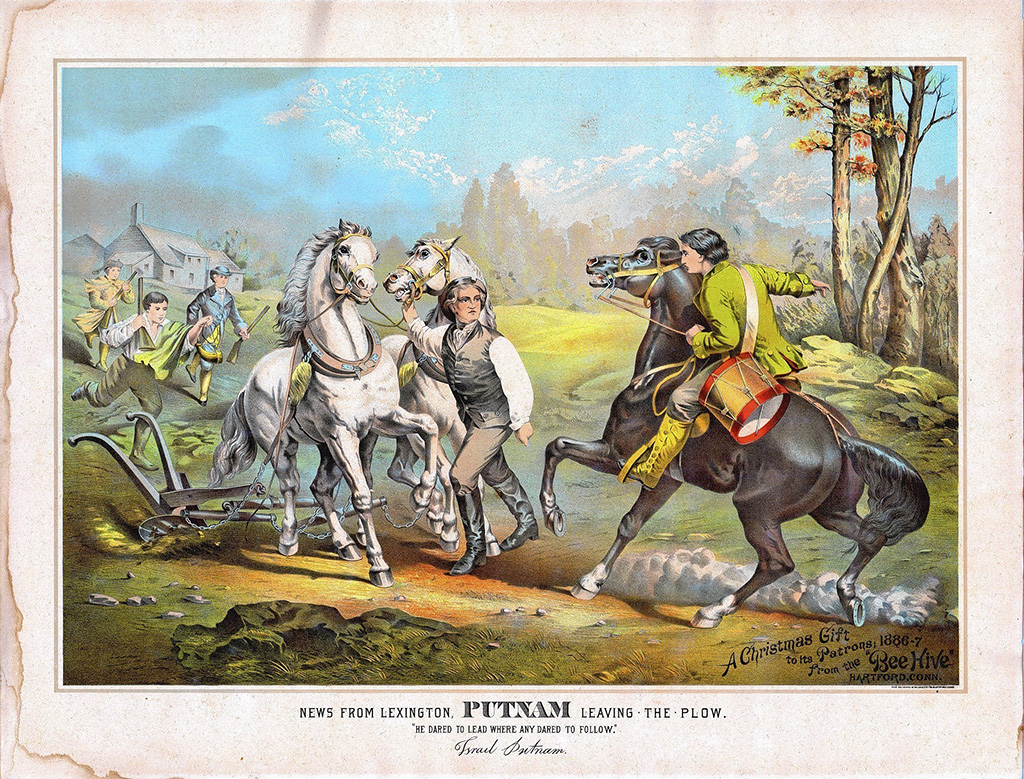
On hearing news of the fighting, Putnam famously left his plow in the field and rode to join the army. Whether polished by memory or not, the story captures his reputation as a man who acted immediately.
The evidence compiled in this project places Putnam in active command roles throughout the engagement: supporting fortification and logistics before and during the battle, coordinating movement between defensive sectors, working the rail-fence line while rallying troops under fire, and operating visibly across the field on horseback. Multiple witnesses described him riding between positions under heavy fire, a detail consistent across testimonies from different regiments.
Within weeks of Bunker Hill, George Washington and Congress elevated Putnam to Senior Major General, effectively second in command of the Continental Army. That appointment is one of the strongest contemporary endorsements of his standing.
At Washington's headquarters in the Longfellow mansion in Cambridge, sometime in the autumn of 1775, Washington offered a dinner-table toast: "A speedy and honorable peace." Days later, Putnam offered a counter-toast: "A long and moderate war." Washington – by all accounts not a man much given to laughter – laughed harder than witnesses had ever heard him. He replied that Putnam was the last man from whom he would have expected such a toast: "you who are always urging vigorous measures, to plead now for a long, and what is still more extraordinary, a moderate, war, seems strange indeed." Putnam's reply: a false peace would divide Americans and not last. He expected nothing but a long war, and he would have it a moderate one, draining the Empire's treasury such that the mother country might in time be willing to cast the colonies off forever.
Daniel Putnam, present at his father's wartime headquarters, recorded the exchange in his 1825 letter to the Bunker Hill Monument Association – the same body that, decades later, would systematically advance the Dearborn Warren narrative at the expense of his father's.1
In late 1775, Connecticut governor Jonathan Trumbull demonstrated David Bushnell's primitive submarine – the Turtle – to General Putnam. Putnam championed it, secured government financing for its further development, and, in the summer of 1776, oversaw its operational deployment in New York Harbor. The Turtle's September 6, 1776 attack on HMS Eagle, the British flagship, was the first wartime use of a submarine. The operator could not attach the explosive charge to the ship's copper-sheathed hull, and the attack failed mechanically; but the deployment itself was historically unprecedented. Putnam's two principal aides on the operation were David Humphreys – who would, a generation later, become Putnam's first biographer – and Aaron Burr, Putnam's aide-de-camp and future vice president.2
In December 1777, Washington wrote to Putnam explaining the strategic importance of obstructing British navigation on the Hudson River – the only route by which British forces from New York could hope to coordinate operations with an army from Canada. By January 1778, Putnam had identified West Point as the controlling site for that obstruction. He oversaw the construction of the fortifications there. The principal redoubt was named Fort Putnam, and it stands as the oldest structure at West Point today.3
Putnam continued to serve in major campaigns, including New York operations and Long Island. He retained his active command before retiring in 1779 due to a stroke.
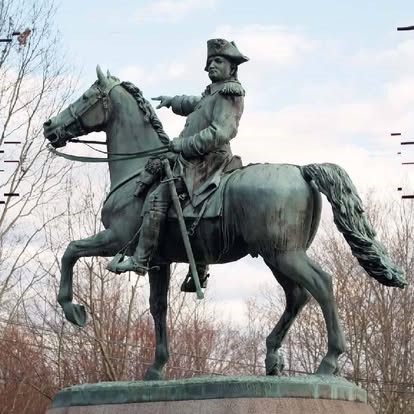
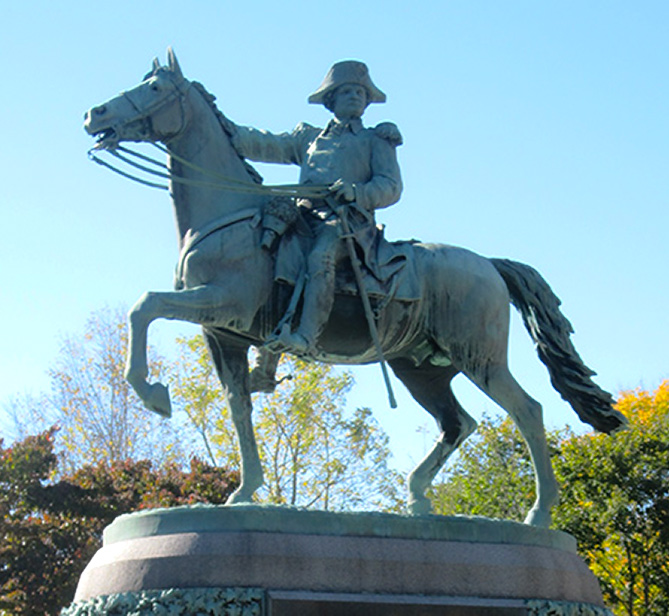
Equestrian statue of Israel Putnam, Brooklyn, Connecticut.
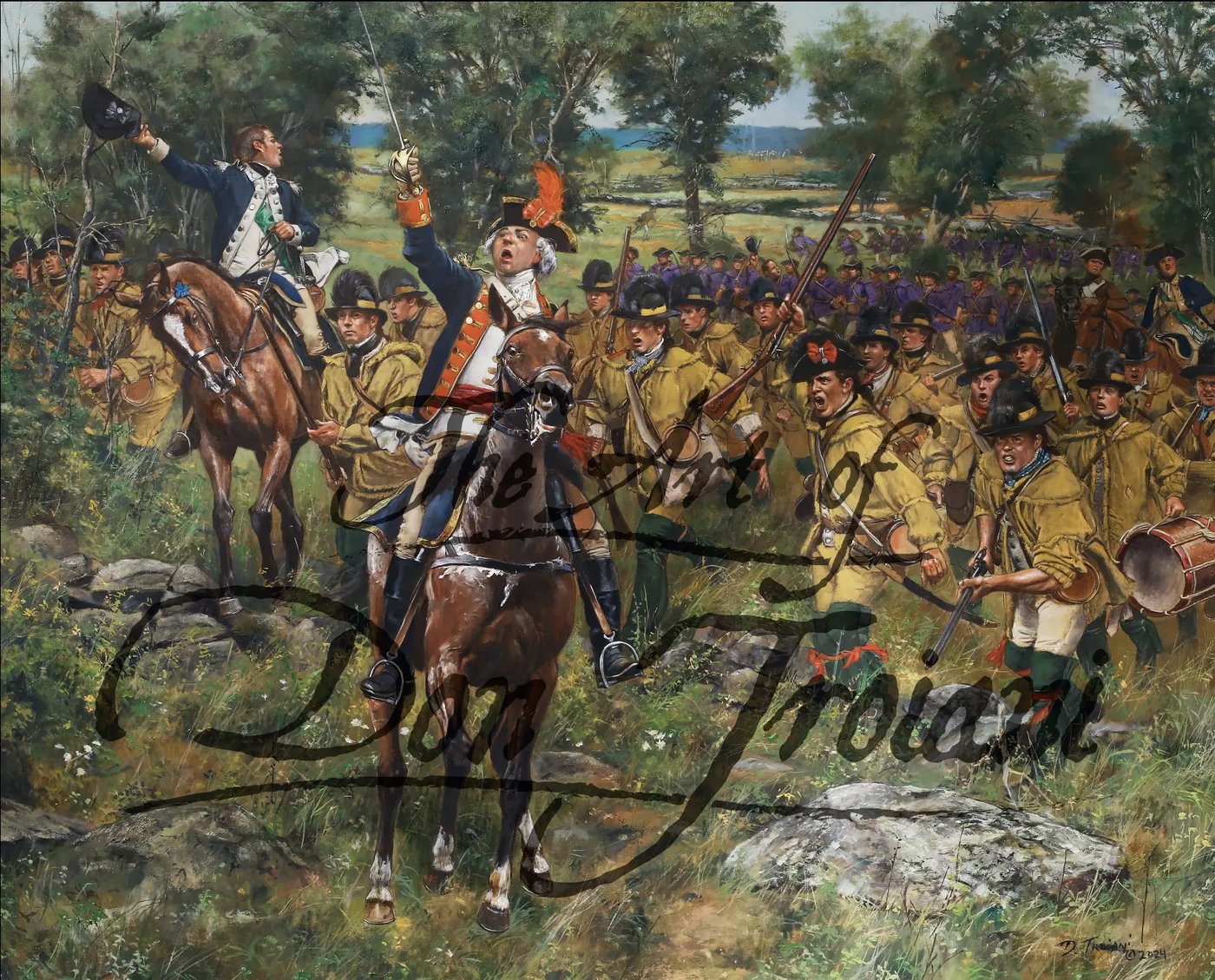
Soldiers called him "Old Put" – a sign of affection and respect rarely afforded to general officers. Accounts consistently describe a man who led visibly under fire, communicated directly with ordinary soldiers rather than through intermediaries, improvised practical solutions with limited resources, and steadied his men in moments when the line threatened to collapse. He was not a theorist or a politician in uniform; he was a working commander whose authority came from shared hardship and personal example.
In popular memory, Putnam represented the citizen-soldier ideal: not aristocratic, not theoretical, but effective through resolve, experience, and action.
There strides bold Putnam... and, mid the whizzing deaths that fill the air, waves back his sword, and dares the following war.Joel Barlow, The Vision of Columbus (1787)
Putnam's story remains important because it speaks to core American themes:
Putnam embodied the citizen-soldier ideal – service grounded in duty rather than social class. His immediate response to the alarm at Lexington illustrated the kind of revolutionary initiative the new nation depended on. Despite severe hardship, including captivity, battlefield wounds, and ultimately a debilitating stroke, he returned to command repeatedly. Washington, Congress, and the leading figures of the Revolution recognized his value, elevating him above officers with more polished credentials. That institutional trust is itself a form of testimony.
Putnam died in 1790 with his reputation intact among those who knew him. The sustained attack on his record emerged decades later, after most participants had died. That makes careful reliance on primary sources not optional, but essential.
This project aims to allow the candid historical record to speak, and judge claims by evidence rather than repetition - for truth to emerge, free of unsupported hidden agendas.
Among the many worthy & meritorious Officers with whom I have had the happiness to be connected in Service through the Course of this War, the Name of a Putnam is not forgotten.George Washington to Israel Putnam, June 2, 1783
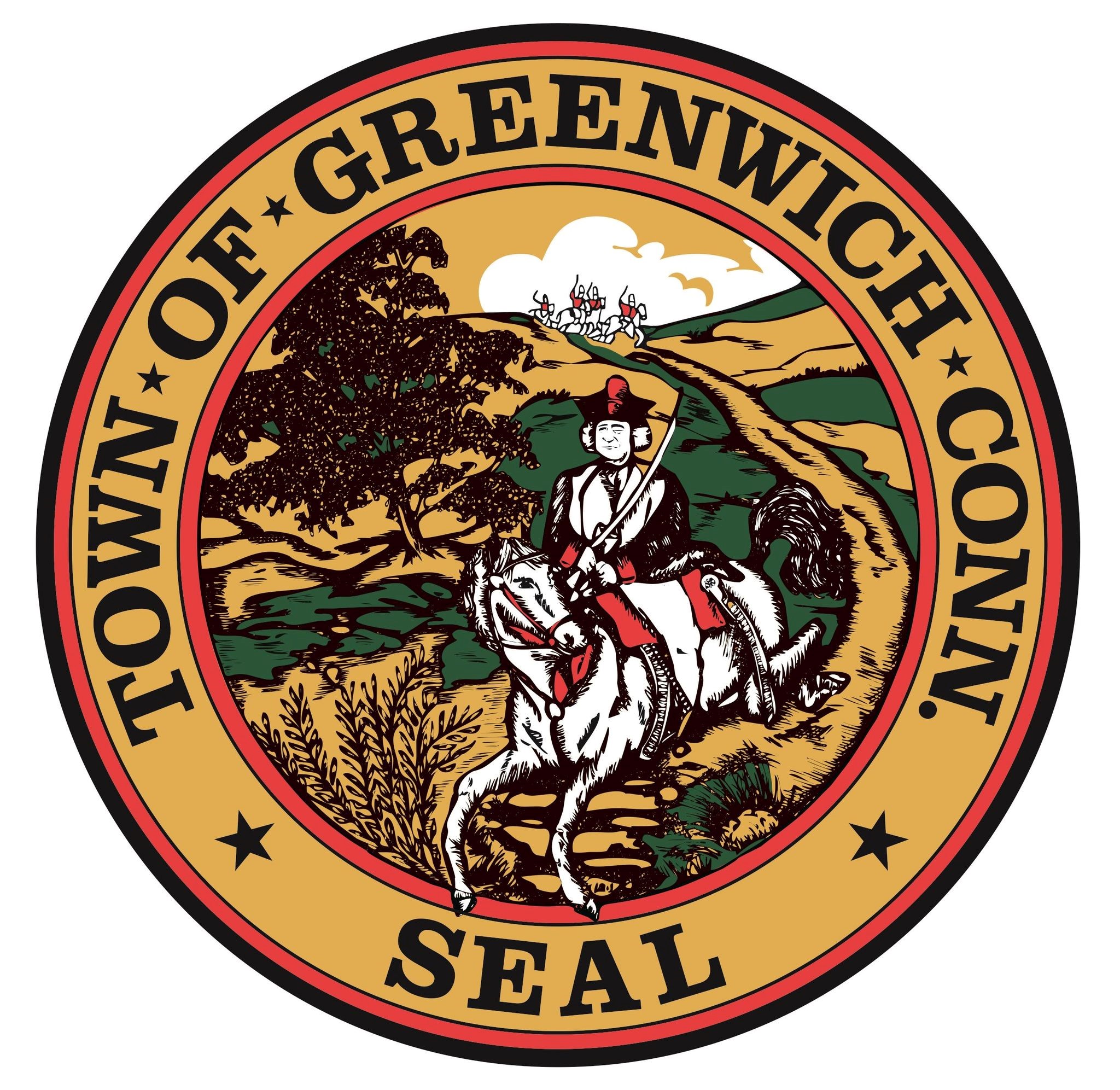
The official seal of Greenwich, Connecticut – Putnam's ride at Horseneck remains part of the town's identity to this day.